When to Visit Chengdu (By Season)
🌸 Spring (March - May) - Best
Pros: Pleasant temperatures (55-75°F / 13-24°C), flowers blooming, less rain.
Cons: Can be crowded during Chinese Labor Day (May 1-5).
Crowds: Moderate. Best time for pandas (active weather).
☀️ Summer (June - August) - Hot & Humid
Pros: Long daylight, all attractions open, lively nightlife.
Cons: Hot (80-95°F / 27-35°C), humid, afternoon thunderstorms.
Crowds: High. Summer break for Chinese students.
🍂 Autumn (September - November) - Best
Pros: Ideal weather (60-75°F / 15-24°C), clear skies, food festivals.
Cons: National Day holiday (Oct 1-7) - avoid!
Crowds: Moderate except during National Day week.
❄️ Winter (December - February) - Mild Cold
Pros: Few tourists, cheaper hotels, pandas are more active in cooler weather.
Cons: Damp cold (35-50°F / 2-10°C), no central heating in some buildings.
Crowds: Low except around Chinese New Year.
💡 Local's Tip
Chengdu is famous for its relaxed pace of life. Don't rush! The best experiences are sitting in a teahouse for hours, eating hotpot slowly, and watching the world go by. Plan 1-2 activities per day max.
Top 10 Attractions in Chengdu
Chengdu is all about the relaxed vibe, giant pandas, and mouth-numbing Sichuan cuisine. Here are the top places you shouldn't miss.

1. Chengdu Research Base of Giant Panda Breeding (大熊猫基地)
This is THE reason many people visit Chengdu. You'll see giant pandas (all ages, from tiny cubs to adults) in a semi-wild environment. The base is huge (92 acres / 37 hectares) and also has red pandas (which are adorable and way more active than giants). Go at 8:00 AM — that's when pandas are most active (they sleep during the day!).
| Ticket Price |
¥52 ($7.50) — Book online at panda.org.cn |
| Opening Hours |
7:30 AM - 6:00 PM (summer) / 8:00 AM - 5:30 PM (winter) |
| How to Get There |
Metro Line 3 to Panda Avenue, then bus 198 or taxi |
| Time Needed |
3-4 hours (it's huge!) |
⚠️ IMPORTANT: Arrive by 7:45 AM! Pandas are active early morning (8:00-10:00 AM), then they sleep the rest of the day. Afternoon visits = sleeping pandas = disappointment.
💡 Local's Tip: Want to HOLD a panda? Book the "Panda Keeper Program" months in advance (¥2000 / $280). Only 20 people per day. It's expensive but life-changing!
2. Jinli Ancient Street (锦里)
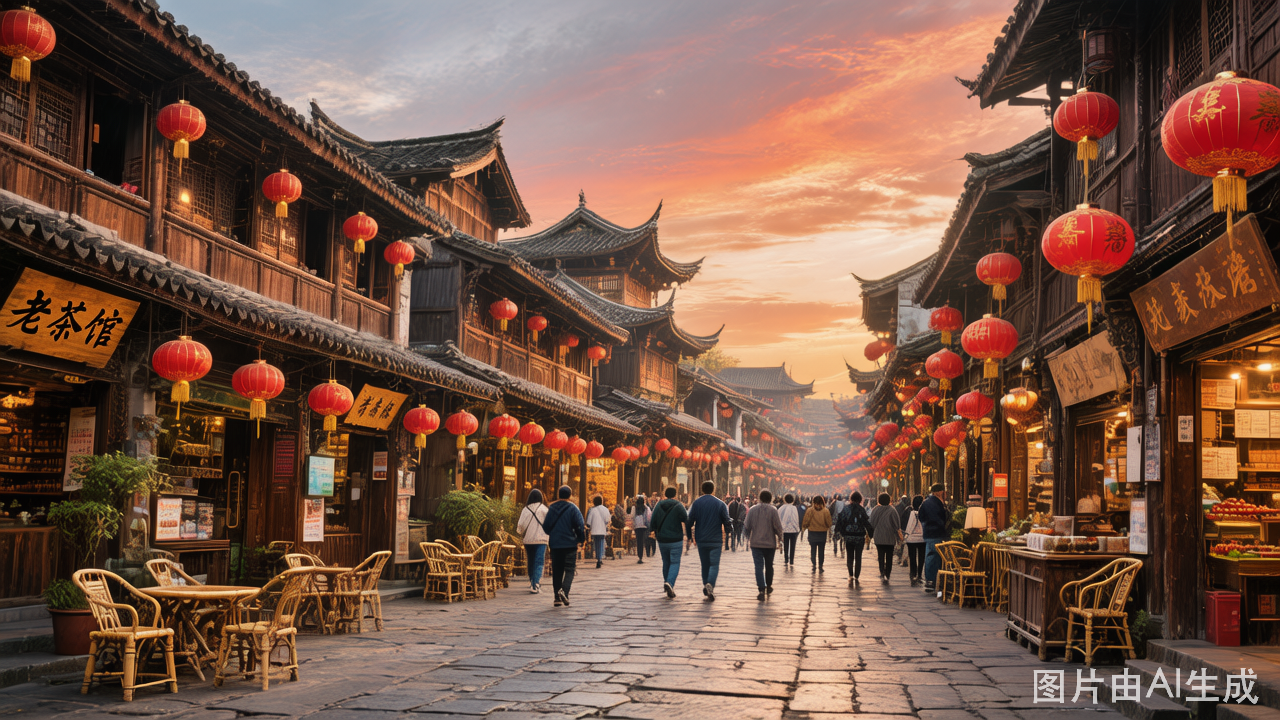
Jinli is a pedestrian street next to Wuhou Temple, built in traditional Sichuan architecture style. It's touristy but fun — you'll find street food, souvenirs, teahouses, and traditional crafts. At night, it's beautifully lit up with red lanterns. Try the "zhajiangmian" (noodles with soybean paste) and "tanghulu" (candied fruit on a stick).
| Ticket Price |
Free (street) / ¥60 ($8.50) for Wuhou Temple |
| Time Needed |
2-3 hours (including Wuhou Temple) |
💡 Local's Tip: Visit at night (7:00-9:00 PM) for the best atmosphere. The red lanterns are magical. Eat "zhajiangmian" at the stall near the entrance.
3. Wuhou Temple (武侯祠)
Most famous temple dedicated to Zhuge Liang (Three Kingdoms era). Next to Jinli Street.
⏱ 2-3 hours
💰 ¥60 ($8.50)
4. Kuanzhai Alley (宽窄巷子)
Historic alleys with teahouses, boutique shops, and Sichuan snacks. More upscale than Jinli.
⏱ 2-3 hours
💰 Free to walk
5. People's Park & Teahouse (人民公园)
The most authentic Chengdu experience. Drink tea, watch locals play mahjong, get ear-cleaning (super relaxing!).
⏱ 2-3 hours
💰 ¥30 ($4) for tea
18 Must-Try Chengdu Foods (Food Capital of China!)
Chengdu is the food capital of China. Sichuan cuisine is famous worldwide for its "málà" (numbing and spicy) flavor. Here's what to eat, where to eat it, and how to survive the spice level!
1. Sichuan Hotpot (四川火锅) - The Religion of Chengdu
What is it? A bubbling pot of spicy (and numbing) broth in the center of the table. You cook raw ingredients (beef, lamb, vegetables, tofu, dumplings) in the broth, then dip in sesame sauce or chili oil. It's social, it's delicious, and it's SPICY. The "málà" comes from Sichuan peppercorns — they make your tongue tingle and go numb (in a good way!).
How to order: Choose "yuánwèi" (original/spicy) or "qīngshuǐ" (clear/mild) broth. Most foreigners start with "yuānwèi" (half spicy, half mild) pot. Order: beef slices, lotus root, tofu, leafy greens, and "mántou" (steamed buns).
Spice level: If you can't handle spice, tell them "bù là" (not spicy). If you love spice, "hěn là" (very spicy)!
Where to Eat Hotpot (Local Favorites):
| Restaurant |
Area |
Price/Person |
English Menu |
| Haidilao (海底捞) |
Multiple locations |
¥150 ($21) |
✅ Yes, excellent service |
| Xiaolongkan (小龙坎) |
Multiple locations |
¥100 ($14) |
❌ No (point and order) |
| Huangchenglao (皇城老妈) |
Jinjiang District |
¥200 ($28) |
✅ Yes |
💡 Local's choice: Haidilao is famous for service (they peel shrimp for you, give you a phone pouch, even make a noodle show!). Xiaolongkan is more authentic/local. Huangchenglao is high-end.
⚠️ WARNING: Sichuan hotpot is REALLY spicy for foreigners. Start with "yuānwèi" (half-half pot). Drink yīkuài (Sichuan iced jelly drink) or sāiguān (sugarcane juice) to cool your mouth. Milk helps too!
2. Mápó Dòufu (麻婆豆腐) - Spicy Tofu
What is it? Soft tofu cubes in a spicy, numbing sauce made with chili bean paste, Sichuan peppercorns, and minced pork. It's the most famous Sichuan dish — invented in Chengdu in 1862! The combination of soft tofu and crunchy minced pork is magical.
Where to eat it: "Chen Mapo Tofu Restaurant" (陈麻婆豆腐) — the original restaurant from 1862. ¥30 ($4) per portion. No English menu, but point at the picture on the wall.
💡 How to Order: Point and say "Zhège" (this one). Or show this: "我要麻婆豆腐" (Wǒ yào mápó dòufu). It's ¥30 ($4) per portion.
More Chengdu Foods You MUST Try:
3. Chuànchuàn (串串) - Skewer Hotpot
Like hotpot but with skewers! Grab skewers from the fridge, cook in communal spicy broth. Pay by the skewer count.
Price: ¥50-80 ($7-11) per person | Where: Any chuanchuan shop
4. Fùqí Fèipiàn (夫妻肺片) - Beef Medley
Cold beef dish with spicy sauce. NOT lung (despite the name!). Thin slices of beef, tripe, and tendon in chili oil.
Price: ¥30 ($4) | Where: Lǎozǎotāng (老灶汤)
5. Dàndàn Miàn (担担面) - Spicy Noodles
Thin noodles with spicy sauce, preserved vegetables, and minced pork. A Chengdu street food classic.
Price: ¥12 ($1.70) | Where: Any noodle shop
6. Tùtóu (兔头) - Rabbit Head
Yes, rabbit head. Spicy, savory, and surprisingly delicious (if you can get past the appearance). A Chengdu late-night favorite.
Price: ¥15 ($2.10) | Where: Night markets, Guijie Street
7. Bàngbàng Jī (棒棒鸡) - Pound Chicken
Shredded chicken with spicy sesame sauce. Cold dish, perfect for summer. The name comes from the wooden stick used to shred the chicken.
Price: ¥35 ($5) | Where: Local restaurants
8. Làzǐjī (辣子鸡) - Chongqing Chicken
Deep-fried chicken with TONS of dried chili peppers. You dig through the chilies to find the chicken pieces. Addictive!
Price: ¥48 ($7) | Where: Chongqing restaurants
Chengdu Itinerary: 3 Days (Perfect for First-Timers)
Day 1: Pandas & Teahouse Culture
Morning: Giant Panda Base (ARRIVE AT 7:45 AM!)
7:45 AM: Arrive at Panda Base (not 9:00 AM — you'll miss the active pandas!).
8:00 AM - 11:00 AM: Explore the base. See giant pandas, red pandas, and the panda nursery (if there are cubs).
11:30 AM: Lunch near the base (try "Sichuan cuisine" at a local restaurant).
Afternoon: Wuhou Temple & Jinli Street
1:30 PM: Visit Wuhou Temple (¥60 / $8.50). Learn about the Three Kingdoms era.
3:00 PM: Walk to Jinli Street. Eat street food, buy souvenirs, drink tea.
6:00 PM: Dinner at Jinli (try "zhajiangmian" and "tanghulu").
Evening: Sichuan Opera & Face-Changing
8:00 PM: Watch Sichuan Opera (especially the "face-changing" act — it's magical!). Tickets ¥180-380 ($25-53). Book at "Sichuan Opera Theater" on WeChat.
Day 2: Teahouse & Hotpot
9:00 AM: People's Park. Drink tea at a teahouse (¥30 / $4), watch locals play mahjong, get ear-cleaning (it's super relaxing!).
12:00 PM: Lunch — try "Mapo Tofu" at the original restaurant.
2:00 PM: Kuanzhai Alley. Explore historic alleys, boutique shops, and try "chuanchuan" (skewer hotpot).
6:00 PM: HOTPOT DINNER! Go to Haidilao or Xiaolongkan. Prepare your stomach for spice!
9:00 PM: Walk along the Anshun Bridge (beautiful at night).
Day 3: Day Trip to Leshan Giant Buddha
7:30 AM: Depart for Leshan (2 hours by high-speed train).
9:30 AM - 12:00 PM: See the Leshan Giant Buddha (233 feet / 71 meters tall!). You can climb down to the Buddha's feet.
12:30 PM: Lunch in Leshan (try "Leshan tofu" and "Qiongyao").
3:00 PM: Return to Chengdu.
6:00 PM: Farewell dinner at "Yulin Road" (trendy area with bars and restaurants).
9:00 PM: Drinks at a teahouse or bar in Yulin.
Practical Tips for Visiting Chengdu (2026 Update)
🚇 Transportation
Metro: Chengdu has 13 metro lines. Buy a "Tianfutong" card (¥20 deposit) or use Alipay/WeChat. ¥2-8 ($0.30-1.10) per ride.
Didi (Chinese Uber): Cheap and convenient. A 20-minute ride = ¥20-35 ($3-5).
High-Speed Train: To Leshan (1 hour, ¥65 / $9), to Chongqing (1.5 hours, ¥145 / $20).
💳 Money & Payments
WeChat Pay & Alipay: ESSENTIAL in Chengdu. Link your foreign credit card. Most restaurants and shops accept mobile payment.
Credit Cards: Accepted at malls, hotels, and high-end restaurants. But NOT at street food stalls or local teahouses.
Cash: Bring ¥300-500 ($42-70) for emergencies.
🌶️ Spice Survival Guide (IMPORTANT!)
Can't handle spice? Say "bù là" (not spicy) when ordering. Or "shǎo là" (less spicy).
What to drink: "Yīkuài" (Sichuan iced jelly drink) or milk. Water doesn't help with spice!
Spice level: Sichuan food is "málà" (numbing + spicy). The numbness is from Sichuan peppercorns, not chili. It's unique!
🚇 Visit Chengdu Metro Guide →
id="faq" style="margin-bottom: var(--space-16);">
FAQ: Things Tourists Always Ask Me
1. How many days do I need in Chengdu?
Minimum: 2 days (Pandas + hotpot).
Ideal: 3-4 days (add Leshan Giant Buddha, teahouse culture).
With day trips: 5-7 days (add Chongqing, Mount Emei).
Don't rush! Chengdu is about the relaxed vibe. Sit in a teahouse for hours, eat hotpot slowly, make friends with locals.
2. Is Sichuan food too spicy for foreigners?
It CAN be, but you can always order "bù là" (not spicy) or "shǎo là" (less spicy). Many Sichuan dishes are not spicy (like "kǒuròu" / steamed pork with rice flour). And hotpot can be "yuānwèi" (half spicy, half mild). Start mild and work your way up!
3. Can I hold a panda?
Yes! The "Panda Keeper Program" lets you hold a panda for 1-2 minutes (for photos). Cost: ¥2000 ($280). Only 20 people per day. Book MONTHS in advance at panda.org.cn. If you can't hold one, don't worry — seeing them up close is amazing enough!
🚌
Chengdu Metro Guide
The metro is the best way to get around Chengdu! Check our detailed guide for routes, schedules, tickets, and transfer tips.
View Metro Guide →
Travel smarter, not harder
Get monthly updates on new guides, transport changes, and local tips — no spam, ever.
Popular Train Routes from Chengdu