12 Best Things to Do in Suzhou (2026 Guide by a Local)
Planning a trip to Suzhou? I've lived in Jiangsu for years, and I'm sharing everything you need to know — from the stunning Humble Administrator's Garden to hidden canal streets that don't appear on Google Maps. Updated for 2026.
When to Visit Suzhou (By Season)
🌸 Spring (March - May) - Best
Pros: Pleasant temperatures (50-75°F / 10-24°C), gardens in full bloom, less smog. Perfect for garden photography. Cons: Can be rainy, occasional crowds during Qingming Festival. Crowds: Moderate. Avoid weekends in April-May when Chinese tour groups arrive.
☀️ Summer (June - August) - Hot & Humid
Pros: Lush green gardens, all attractions open, night garden tours available. Cons: Hot (85-95°F / 30-35°C), humid, rainy season in June-July. Crowds: High during summer break (July-August).
🍂 Autumn (September - November) - Best
Pros: Ideal weather (60-75°F / 15-24°C), clear skies, beautiful autumn colors in gardens. Cons: National Day holiday (Oct 1-7) - extremely crowded, avoid at all costs. Crowds: Moderate except during National Day week.
❄️ Winter (December - February) - Cold but Quiet
Pros: Few tourists, cheaper hotels, see gardens with snow (magical!). Cons: Cold (30-50°F / -1 to 10°C), some garden sections may close. Crowds: Low except around Chinese New Year (Jan/Feb).
💡 Local's Tip
The best time to visit Suzhou is mid-March to mid-May or September to mid-October. Avoid National Day (Oct 1-7) and Chinese New Year — gardens will be unbearably crowded. If you must visit in summer, go early morning (7:30 AM) before the heat and tour groups arrive.
Top 10 Attractions in Suzhou
Based on garden beauty, historical significance, and my own experience showing friends around. I've included ticket prices, opening hours, how to get there, and — most importantly — how to avoid the worst crowds.
1. Humble Administrator's Garden (拙政园) - UNESCO World Heritage
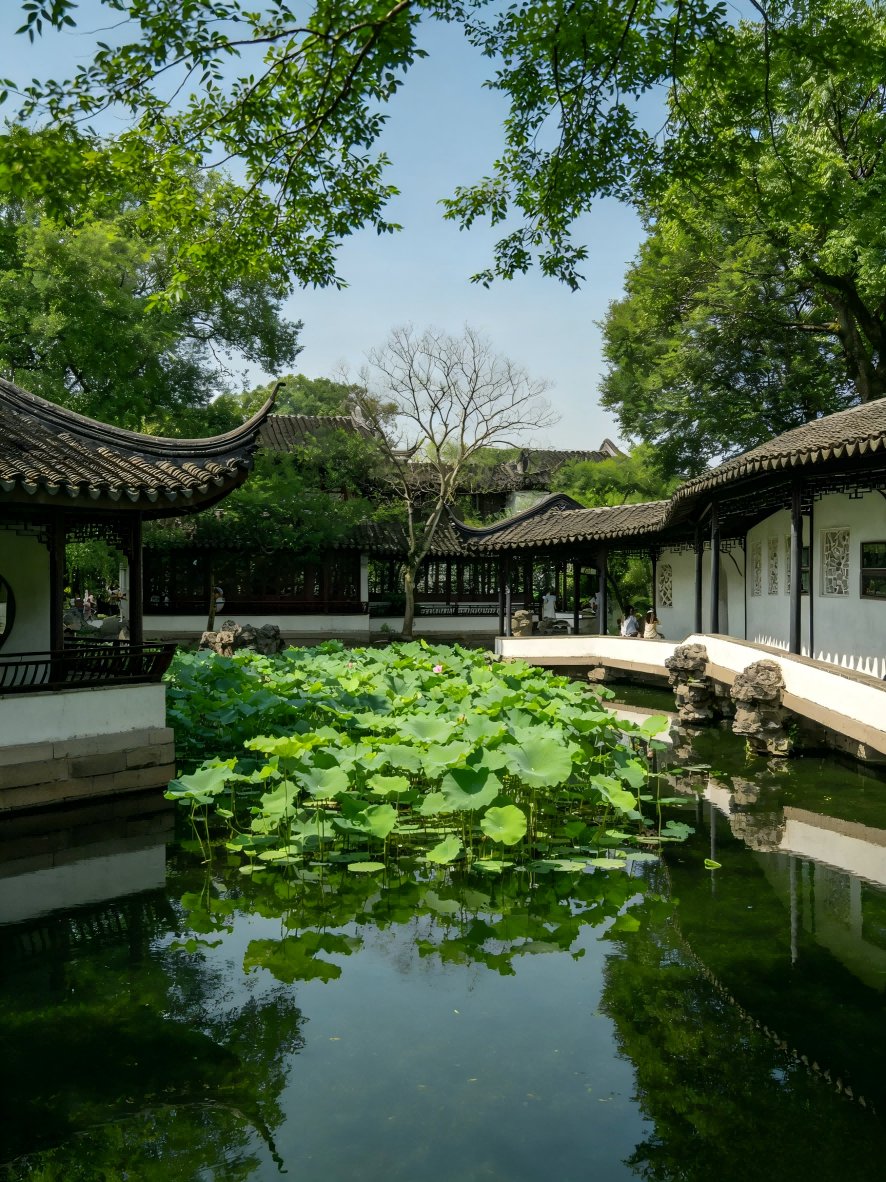
The largest and most famous garden in Suzhou, built in 1509 during the Ming Dynasty. It's a masterpiece of Chinese landscape design — ponds, bridges, pavilions, and rockeries arranged to create "scenery within scenery." This is THE garden to visit in Suzhou. The name comes from a poem meaning "a simple life as a retired official."
🕐 Opening Hours7:30 AM - 5:30 PM (Mar-Nov) / 7:30 AM - 5:00 PM (Dec-Feb). Last entry 30 mins before closing.
🚇 Getting ThereMetro Line 4 to BeisîJie Station (北寺塔), then 10-min walk
⏱ Time Needed2-3 hours (it's huge and you'll want to take photos)
⚠️ IMPORTANT: Tickets often sell out during peak season (spring/autumn). Book online via szzzy.cn (Chinese only, use Google Translate) or buy from your hotel. Arrive before 8:00 AM to beat crowds.
💡 Local's Tip: Enter from the east gate (东门) — most tour groups enter from the south, so you'll avoid the initial crush. The Lotus Pond (荷花池) is most beautiful in June-July.
2. Lingering Garden (留园) - Famous for Rockeries
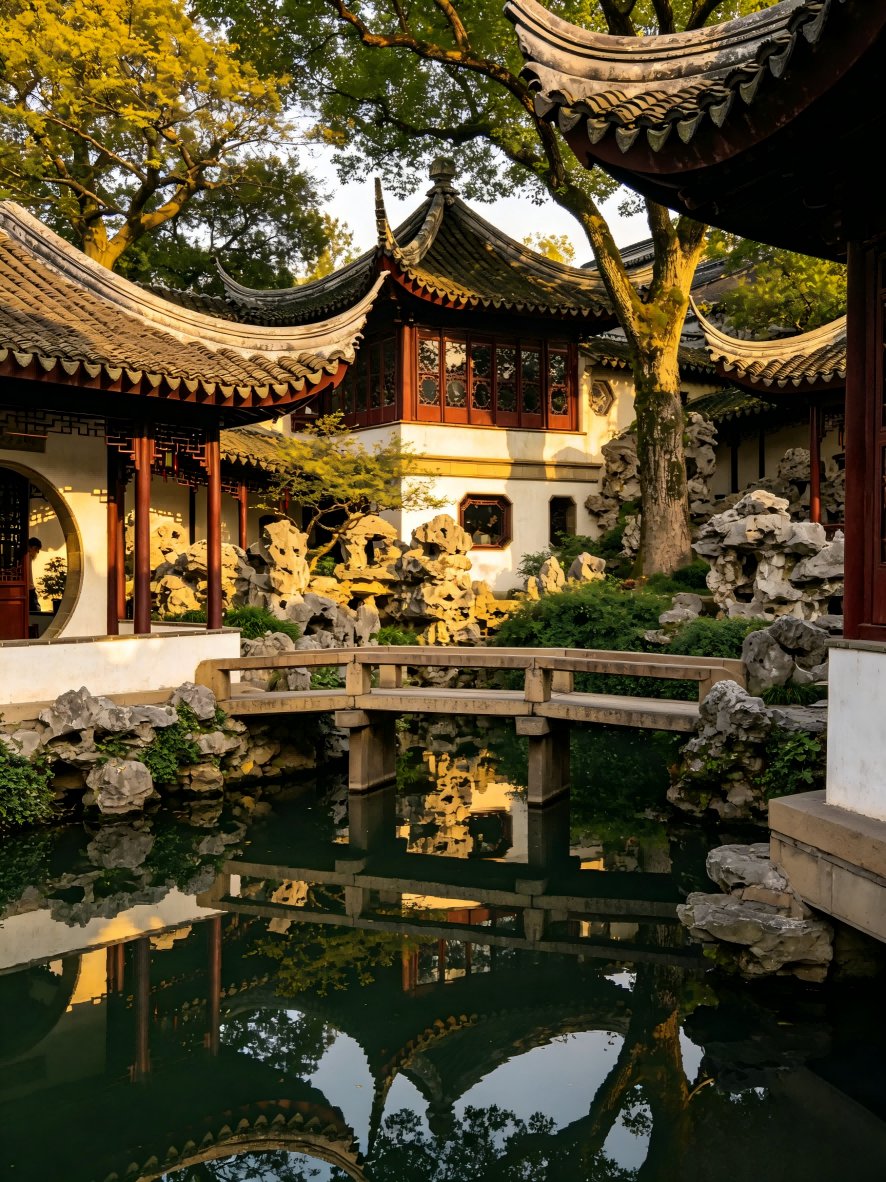
Smaller but more intimate than the Humble Administrator's Garden, the Lingering Garden is famous for its Taihu rockeries (the weirdly shaped rocks that look like abstract sculptures). It's also less crowded than the big garden. The name "Lingering" comes from the owner's desire to linger here forever.
🕐 Opening Hours7:30 AM - 5:30 PM (Mar-Nov) / 7:30 AM - 5:00 PM (Dec-Feb)
🚇 TransportMetro Line 2 to Shilu Station (石路), then 15-min walk or taxi
⏱ Time Needed1.5-2 hours
💡 Local's Tip: Visit in the late afternoon (3-4 PM) when tour groups have left. The light through the trees is magical for photos. Don't miss the "Cloud-Capped Peak" (冠云峰) — it's the tallest Taihu rock in Suzhou!
3. Pingjiang Road (平江路) - Ancient Canal Street
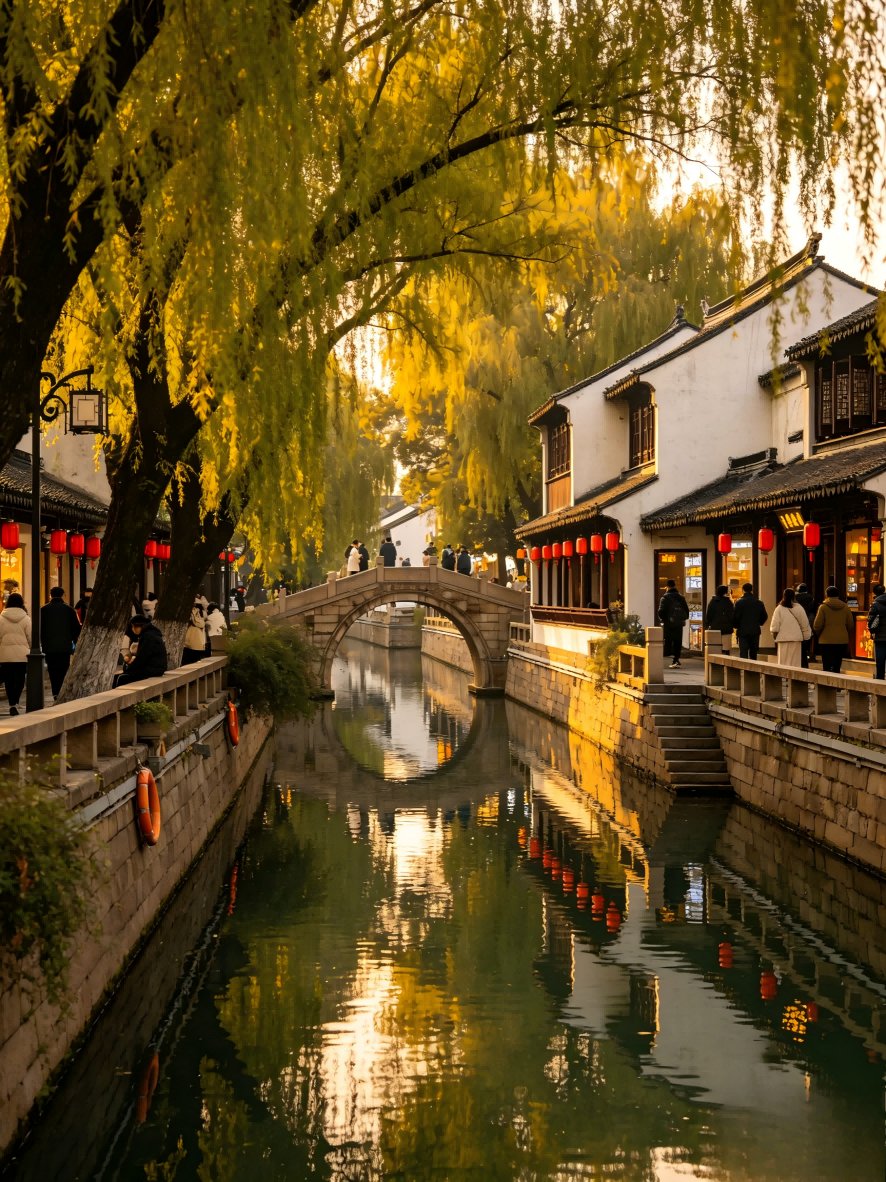
Pingjiang Road is a 800-year-old street along a canal, lined with white-washed buildings, stone bridges, and willow trees. It's the most picturesque street in Suzhou. You can take a wooden boat ride (¥150 for 6 people) along the canal, or just stroll and eat street food. At night, the red lanterns reflect on the water — incredibly romantic.
💰 CostFree to walk / ¥150 ($21) for boat ride (6 pax max)
🕐 Best TimeEarly morning (7-9 AM) or evening (6-9 PM) for lights
⏱ Time Needed2-3 hours (including boat ride and food)
💡 Local's Tip: Skip the main Pingjiang Road (too touristy) and wander into the side alleys (like Daru Lane / 大儒巷). That's where locals live and where you'll find the best street food. Try the sesame cakes (芝麻饼) from the old lady near the canal bridge.
4. Tiger Hill (虎丘) - Leaning Pagoda
Suzhou's oldest attraction (2,500 years!). The Yunyan Pagoda leans at 3.5 degrees — China's own Tower of Pisa. Beautiful in autumn for maple leaves.
💰 ¥60 ($8.50)🕐 7:30 AM - 6:00 PM🚇 Line 2 to Tiger Hill⏱ 2-3 hours
5. Shantang Street (山塘街) - "The Clear River in Heaven"
A 7km ancient street along the Shantang River. Less touristy than Pingjiang Road. Great for night walks with lanterns reflecting on water.
💰 Free to walk🕐 24 hours (shops 10 AM - 10 PM)🚇 Line 2 to Shantang Street⏱ 2 hours
6. Suzhou Museum (苏州博物馆)
Designed by world-famous architect I.M. Pei (he's from Suzhou!). Stunning modern building with classical gardens inside. Free entry, but must book in advance.
💰 Free (book online)🕐 9:00 AM - 5:00 PM (Mon closed)🚇 Line 4 to BeisîJie⏱ 2 hours
7. Jinji Lake (金鸡湖) - Modern Suzhou
The modern side of Suzhou. Huge lake with futuristic art museum (Suzhou Museum West), light shows at night, and upscale malls. Great contrast to the old town.
💰 Free (outdoors)🕐 24 hours (museum 9 AM - 5 PM)🚇 Line 1 to Jinji Lake⏱ 3-4 hours
8. Tongli Water Town (同里) - UNESCO
A well-preserved water town 30 mins from Suzhou. Fewer tourists than Zhouzhuang. Famous for the "Retreat & Reflection Garden" (Tuisi Garden) — another UNESCO site.
💰 ¥100 ($14) for town + gardens🕐 7:30 AM - 5:30 PM🚌 Bus 725 from Suzhou Railway Station⏱ Half day
9. Hanshan Temple (寒山寺) - "Moon over the Cold Mountain"
Famous from a Tang Dynasty poem. Ring the 108-ton bell for good luck. Very peaceful, especially early morning when monks are chanting.
💰 ¥20 ($3)🕐 7:30 AM - 5:00 PM🚇 Line 2 to Shilu + taxi⏱ 1-2 hours
10 Must-Try Suzhou Foods (Written by a Local)
Suzhou cuisine (Su cuisine / 苏菜) is one of China's eight great cuisines. It's known for being sweet, delicate, and beautifully presented. Here's what to eat, where to eat it, and how to order like a local.
1. Suzhou Noodles (苏式汤面) - Breakfast of Champions
What is it? Suzhou noodles are famous across China. The broth is clear, savory, and slightly sweet. You pick your noodle type (thin/wide) and topping (braised pork, shrimp, eel, etc.). Locals eat this for breakfast at 6 AM — the earlier, the better the broth.
Where to Eat Suzhou Noodles:
Restaurant
Area
Price per Person
English Menu
Yaba Shengjian (哑巴生煎)
Guanqian Street
¥25 ($3.50)
❌ No (point & pay)
Zhuangyuan Binfen (状元饼粉)
Pingjiang Road
¥30 ($4.50)
❌ No (simple menu)
Linfengfang (林凤坊)
Shiquan Street
¥40 ($6)
✅ Photos on wall
💡 Local's choice: Go to Yaba Shengjian at 6:30 AM. Order "生煎包" (shēngjiān bāo) — pan-fried buns with soup inside. So good!
How to Order: Say "我要一碗面" (Wǒ yào yī wǎn miàn) — "I want a bowl of noodles." Point at the topping you want (there's usually a picture menu). Add "不放葱" (bù fàng cōng) if you don't want green onions.
What is it? A whole mandarin fish (桂鱼) deep-fried until crispy, then cut into a "squirrel" shape (the tail curls up like a squirrel!). Covered in a sweet-and-sour sauce with pineapple, tomatoes, and pine nuts. It's the most famous Suzhou dish — invented here in the Qing Dynasty.
💡 Local's Tip: This dish is expensive (¥120-180 / $17-25) and meant for groups. If you're solo, try it at a mid-range restaurant where you can order half-portion. The best place is Songhelou (松鹤楼) — they invented the dish!
3. Shengjian Bao (生煎包)
Pan-fried buns with soup inside. Crispy bottom, soft top. Eat carefully — soup squirts out! ¥8 for 4 pcs.
4. Tangyuan (汤圆) - Sweet Rice Balls
Glutinous rice balls with sweet filling (sesame, red bean). Suzhou style is osmanthus-flavored. Best in winter. ¥15/bowl.
5. Biluochun Tea (碧螺春)
One of China's top 10 teas, grown near Taihu Lake. Floral, slightly sweet. Buy at Suzhou Tea Market. ¥80-200/50g.
6. Suzhou Salted Duck (苏州酱鸭)
Not as famous as Nanjing's, but Suzhou's version is sweeter and more aromatic. Buy vacuum-packed from old brand shops on Guanqian Street.
2-Day Suzhou Itinerary (Optimized by a Local)
This itinerary is designed to avoid the worst crowds and see the best of Suzhou in just 2 days. It's perfect if you're doing a Shanghai-Suzhou-Hangzhou loop (very common!).
Day 1: Classic Gardens & Canals
1
7:30 AM - Humble Administrator's Garden (first entry!)
Arrive before 8:00 AM to have the garden almost to yourself. Spend 2-3 hours taking photos and enjoying the tranquility. Entry fee: ¥70 (peak) / ¥50 (off-peak).
2
11:00 AM - Suzhou Museum (right next door!)
Walk 5 mins to the Suzhou Museum (free, book online). See I.M. Pei's stunning architecture. Free, 2 hours.
3
1:00 PM - Lunch: Suzhou Noodles at Guanqian Street
Walk 15 mins to Guanqian Street. Try Yaba Shengjian for shengjian bao (pan-fried buns). ¥25/person. Budget-friendly!
4
3:00 PM - Pingjiang Road (canal walk)
Walk along the ancient canal street. Take a wooden boat ride (¥150 for 6 people, or ¥40/person if shared). Try sesame cakes (芝麻饼) from street vendors. Free to walk, boat ¥40.
5
6:00 PM - Dinner: Songshu Guifei at Songhelou
Take a taxi to Songhelou Restaurant (est. 1760!). Order the famous "squirrel fish" (松鼠桂鱼). ¥150/person. Reservations recommended!
6
8:00 PM - Night walk at Pingjiang Road (lantern lights!)
The red lanterns reflecting on the canal are magical at night. Perfect for photos. Grab a drink at a canal-side cafe. Free!
💰 Day 1 Total Cost: ¥200-300 / $28-42 (including food, transport, tickets). Budget-friendly!
Day 2: Gardens, Pagodas & Water Towns
1
8:00 AM - Lingering Garden (avoid crowds)
Visit in the late morning when tour groups have left. The light through the trees is magical for photos. Entry fee: ¥55 (peak) / ¥45 (off-peak).
2
11:00 AM - Tiger Hill (leaning pagoda!)
See the "Leaning Pagoda of China" (3.5 degrees tilt). Beautiful in autumn for maple leaves. Entry: ¥60.
3
2:00 PM - Tongli Water Town (UNESCO garden!)
Take a 30-min bus (Bus 725) to Tongli. Explore the "Retreat & Reflection Garden" (UNESCO). Less touristy than Zhouzhuang. Entry: ¥100 (town + gardens).
4
6:00 PM - Dinner: Shantang Street (night lights)
Return to Suzhou and walk Shantang Street at night. The lanterns reflecting on the water are incredibly romantic. Eat street food (grilled squid, stinky tofu if you're brave!). Free to walk.
5
8:30 PM - Jinji Lake light show (optional)
If you have energy, take Metro Line 1 to Jinji Lake. There's a free light show at the art museum (Fri-Sun, 7:30 PM). Modern Suzhou at its best! Free!
💰 Day 2 Total Cost: ¥250-350 / $35-50 (including water town entry, transport, food). Moderate budget.
💡 Local's Itinerary Tips
✅ Best season: March-May or September-November (avoid summer heat and winter cold)
✅ Get the Suzhou Metro app: Download "Suzhou Metro" (苏州地铁) on App Store — it has English interface
✅ Combine with Shanghai: Suzhou is only 25 mins by high-speed train from Shanghai — perfect day trip!
✅ Book hotels early: Suzhou is small, so hotels fill up fast in peak season
✅ Wear comfortable shoes: You'll walk 15,000+ steps per day in Suzhou's gardens and alleys!
Practical Tips for Suzhou (What Locals Know)
🚇 How to Get to Suzhou
From Shanghai: High-speed train, 25-35 mins. Trains depart every 10-15 mins from Shanghai Hongqiao or Shanghai Railway Station. ¥40-80 ($6-11).
From Beijing: High-speed train, 4.5-5.5 hours. ¥400-600 ($55-85).
From Hangzhou: High-speed train, 1.5 hours. ¥80-120 ($11-17).
🏨 Where to Stay
Budget: Guesthouses near Pingjiang Road (¥150-250 / $21-35/night). Book on Booking.com or Ctrip.
Mid-range: Hotels near Suzhou Railway Station (¥300-500 / $42-70/night). Convenient for trains.
Luxury: Suzhou Shangri-La or PANO HOTELS (¥800+ / $110+/night).
💳 Payment & Money
Cash: Still useful for street food and small shops. Bring ¥200-300 cash.
Alipay/WeChat Pay: Set up before you arrive (need Chinese bank account or international card). Most places don't accept foreign credit cards.
ATMs: Available at all major banks (ICBC, Bank of China). Use your debit card to withdraw cash.
🗣️ Language & Communication
Suzhou dialect: Locals speak a soft, musical dialect (similar to Shanghainese). But everyone speaks Mandarin.
English: Limited in Suzhou (less than Shanghai). Download Google Translate (camera mode for menus) and Pleco (Chinese dictionary).
Wi-Fi: Most hotels and cafes have free Wi-Fi. Ask for the password (usually on the receipt).
🚗 Getting Around Suzhou
Metro: 5 lines covering most attractions. Buy a transit card (¥20 deposit) or use Alipay transit code.
Taxi/DiDi: Cheap and convenient. Use DiDi app (Chinese Uber). Show driver the destination in Chinese.
Bicycle: Rent via HelloBike (blue bikes everywhere). ¥1.5 for 30 mins. Great for garden-hopping!
FAQ About Visiting Suzhou (Real Questions from Travelers)
Is Suzhou worth visiting? (Or is it just a day trip from Shanghai?)
Absolutely worth 2 days! While many people do Suzhou as a day trip from Shanghai (it's only 25 mins by train), I recommend staying overnight. The gardens are magical at sunrise and sunset when tour groups have left. Plus, the canal streets (Pingjiang Road, Shantang Street) are incredibly romantic at night with lantern lights reflecting on the water. Don't rush it!
When is the best time to visit Suzhou?
Spring (March-May) and Autumn (September-November) are the best times. The weather is pleasant (60-75°F / 15-24°C), gardens are in bloom (spring) or autumn colors (autumn), and there's less smog. Avoid National Day (Oct 1-7) and Chinese New Year — gardens will be unbearably crowded. Summer is hot and humid (85-95°F / 30-35°C), but early morning garden visits are still possible.
How many days do I need in Suzhou?
2 days is perfect. Day 1: Humble Administrator's Garden + Suzhou Museum + Pingjiang Road. Day 2: Lingering Garden + Tiger Hill + Tongli Water Town. If you're short on time, you can do the top 5 attractions in 1 day (Humble Administrator's Garden, Pingjiang Road, Lingering Garden, Tiger Hill, Shantang Street at night), but it'll be rushed. I don't recommend more than 2 days — Suzhou is small and you'll have seen the main sights.
Do I need to book tickets in advance?
Yes, for peak season! The Humble Administrator's Garden often sells out during spring (March-May) and autumn (September-November). Book online via szzzy.cn (Chinese only — use Google Translate) or ask your hotel to book for you. For off-peak season (winter/summer), you can usually buy tickets on-site, but arrive early (before 8:00 AM) to avoid queues. Suzhou Museum is free but requires advance booking (book on their official WeChat account).
Is Suzhou touristy? (Will I see real China?)
The main gardens and Pingjiang Road are touristy (especially on weekends), but if you wake up early (7:30 AM), you'll have them almost to yourself. The side alleys off Pingjiang Road (like Daru Lane / 大儒巷) are where locals live — wander there to see real Suzhou life. Tongli Water Town is much less touristy than Zhouzhuang. And the best food is in residential neighborhoods, not on tourist streets. Ask your hotel for recommendations!
Can I visit Suzhou and Hangzhou in one trip?
Yes! It's a very common route: Shanghai → Suzhou (1-2 days) → Hangzhou (1-2 days) → Shanghai (or vice versa). High-speed trains connect all three cities: Suzhou to Hangzhou is 1.5 hours (¥80-120 / $11-17). I recommend 2 days in Suzhou + 2 days in Hangzhou for a relaxed trip. Both cities have beautiful lakes (Jinji Lake / West Lake) and gardens/tea plantations.
What should I wear in Suzhou?
Comfortable walking shoes are essential — you'll walk 15,000+ steps per day on cobblestone streets and garden paths. Layers (spring/autumn temperatures change quickly). Light, breathable clothing for summer (hot and humid). A light jacket for evenings (it can get chilly by the canal). Umbrella for sudden rain (June-July is rainy season). And sunscreen — the sun reflecting off the garden ponds is stronger than you think!